Using Games to Teach Math: Turning Play into Powerful Learning
By Totally Medieval · August 4, 2026

For generations, mathematics has often been taught through worksheets, repetitive drills, and memorization. While these methods can build important skills, they are not always the most engaging way for children to learn. Many students struggle to stay motivated when math feels disconnected from everyday life or enjoyable experiences.
Games offer a different approach. Instead of viewing math as another school subject, students begin to experience it as a tool that helps them solve problems, make decisions, recognize patterns, and succeed in exciting challenges. Whether they are calculating resources, measuring distances, planning strategies, or solving puzzles, students naturally practice mathematical thinking while having fun.
Modern educational research continues to demonstrate that game-based learning can significantly improve engagement, motivation, and long-term
retention. When children enjoy the learning process, they are more likely to voluntarily practice, persist through difficult problems, and remember what they have learned long after the lesson ends.
Why Games Help Students Learn Mathematics
Scientists who study learning have discovered that the brain remembers information better when multiple parts of the brain are active at the same time. During a well-designed educational game, students are often:
- Solving problems
- Making decisions
- Remembering
previous information
- Planning future moves
- Collaborating with others
- Experiencing positive emotions
- Receiving immediate feedback
This combination creates stronger neural connections than passive learning alone.
Research published in educational psychology journals has consistently found that active learning produces higher achievement than passive instruction. Students who must actively retrieve information, apply concepts, and make decisions strengthen their memory much more effectively than students who simply reread notes or watch demonstrations.
Games naturally encourage this active retrieval.
Instead of asking, "What is 7 × 8?" on a worksheet, a game may require a student to quickly calculate that answer in order to build a castle, purchase supplies, defeat an opponent, or move across the board. The mathematics suddenly becomes meaningful.
The Science of Long-Term Memory
One of the greatest challenges in education is helping students remember what they learned months—or even years—after a lesson.
Researchers have identified several learning principles that improve long-term retention.
1. Retrieval Practice
Every time students recall information from memory instead of simply rereading it, the memory becomes stronger.
Games constantly require retrieval.
Players repeatedly remember multiplication facts, fractions, measurements, probabilities, coordinates, or geometry while playing.
2. Spaced Repetition
Learning improves when practice occurs over many days rather than in one long study session.
Games naturally encourage repeated play. A child who asks to play the same game several evenings in a row is unknowingly giving their brain exactly the ty
pe of spaced practice that memory researchers recommend.
3. Immediate Feedback
Educational psychologists have found that immediate feedback helps students correct misunderstandings before incorrect methods become permanent habits.
Games provide constant feedback.
If a calculation is incorrect, the player immediately sees the consequences within the game and can quickly adjust their thinking.

4. Emotional Engagement
Neuroscience research shows that emotionally meaningful experiences are remembered better than emotionally neutral ones.
Friendly competition, laughter, teamwork, excitement, and overcoming challenges all help create positive emotional memories that strengthen learning.
Math Is More Than Arithmetic
Many parents think of mathematics as simply addition, subtraction, multiplication, and division.
Those skills are certainly important, but mathematics includes much more.
Games regularly help students practice:
- Logical reasoning
- Pattern recognition
- Probability
- Strategic planning
- Geometry
- Estimation
- Mental calculation
- Resource management
- Financial decision making
- Measurement
- Data analysis
- Spatial reasoning
These are the same types of thinking skills used by engineers, architects, programmers, scientists, business leaders, economists, and countless other professionals.
Why Strategy Games Build Better Thinkers
Strategy games encourage students to think several moves ahead.
Rather than solving one isolated math problem, students must continually ask themselves:
"If I spend these resources now, what will happen later?"
"What are the chances my opponent will move here?"
"How many points can I earn if I combine these actions?"
These decisions require mathematical thinking without making students feel like they are completing another assignment.
Over time, students become faster at recognizing patterns and performing mental calculations because those skills help them succeed during play.
Action Steps Parents Can Use Today
Parents do not need expensive technology or complicated lesson plans to make mathematics more exciting. Small changes can transform ordinary fam
ily activities into valuable math practice.
1. Schedule Weekly Family Game Night
Choose games that involve counting, money, measurements, probabilities, or strategy. Consistency matters more than length. Even thirty minutes once or twice each week creates regular opportunities for mathematical thinking.
2. Ask "How Did You Figure That Out?"
Instead of simply checking whether an answer is correct, ask children to explain their reasoning.
This develops mathematical communication, deeper understanding, and confidence.
3. Celebrate Good Thinking
Praise effort, creative strategies, and persistence rather than speed alone.
Children who believe mistakes are part of learning become much more willing to tackle difficult mathematical problems.
4. Make Everyday Activities Mathematical
Invite children to:
- Calculate grocery discounts
- Double or halve recipes
- Measure building projects
- Estimate travel times
- Compare prices
- Keep score during sports
- Plan vacation budgets
Real-life mathematics helps students understand why these skills matter.

5. Replace Ordinary Dice with Math Dice
One of the easiest ways to transform almost any board game into a math lesson is by replacing traditional numbered dice with educational Math Dice.
Instead of simply rolling a number and moving forward, students solve a quick math fact before taking their turn.
This simple change creates dozens—or even hundreds—of additional opportunities to practice math facts during a single game without making the experience feel like homework.
Because children remain focused on winning the game, they often forget they are practicing mathematics at the same time.
Making Every Game a Math Game
Imagine your family playing a favorite board game.
Normally, a player rolls a six-sided die and moves six spaces.
Now imagine replacing that die with a Math Die.
Before moving, the player quickly solves the math fact shown on the flash card (we call them Math Dice). Once the correct answer is given, they continue playing normally.
Nothing else about the game changes. If they answered it right, they got the points, or not, they didn’t.
Over the course of an evening, students may solve fifty to one hundred math problems while remaining completely engaged in the game itself.
This approach works because the mathematics becomes part of the adventure rather than interrupting it.
Children quickly discover that practicing math helps them spend more time doing something they already enjoy.
Building Confidence Through Repetition
Many students dislike mathematics simply because they lack confidence.
Games create low-pressure opportunities to practice repeatedly without the fear often associated with tests or quizzes.
Every successful calculation builds confidence. Every correct answer becomes another small victory. And eventually, students begin recognizing patterns automatically instead of counting on their fingers or hesitating over basic facts.
That confidence often carries directly into classroom performance.
Learning Together Strengthens Families
Game-based learning also creates something worksheets cannot easily provide: shared experiences.
Parents become coaches instead of graders.
Siblings encourage one another.
Grandparents participate alongside grandchildren.
These positive memories strengthen family relationships while reinforcing academic learning at the same time.
Students frequently remember these experiences long after they forget individual classroom assignments.
Learning Mathematics Through Adventure
The goal of mathematics education is not simply memorizing facts—it is developing confident problem-solvers who enjoy thinking critically and tackling new challenges.
Games provide one of the most natural environments for achieving that goal. They combine repetition, retrieval practice, strategic thinking, immediate feedback, and emotional engagement into an experience that students genuinely enjoy. Educational research consistently shows that these ingredients help strengthen understanding and improve long-term retention, making game-based learning a powerful complement to traditional instruction.
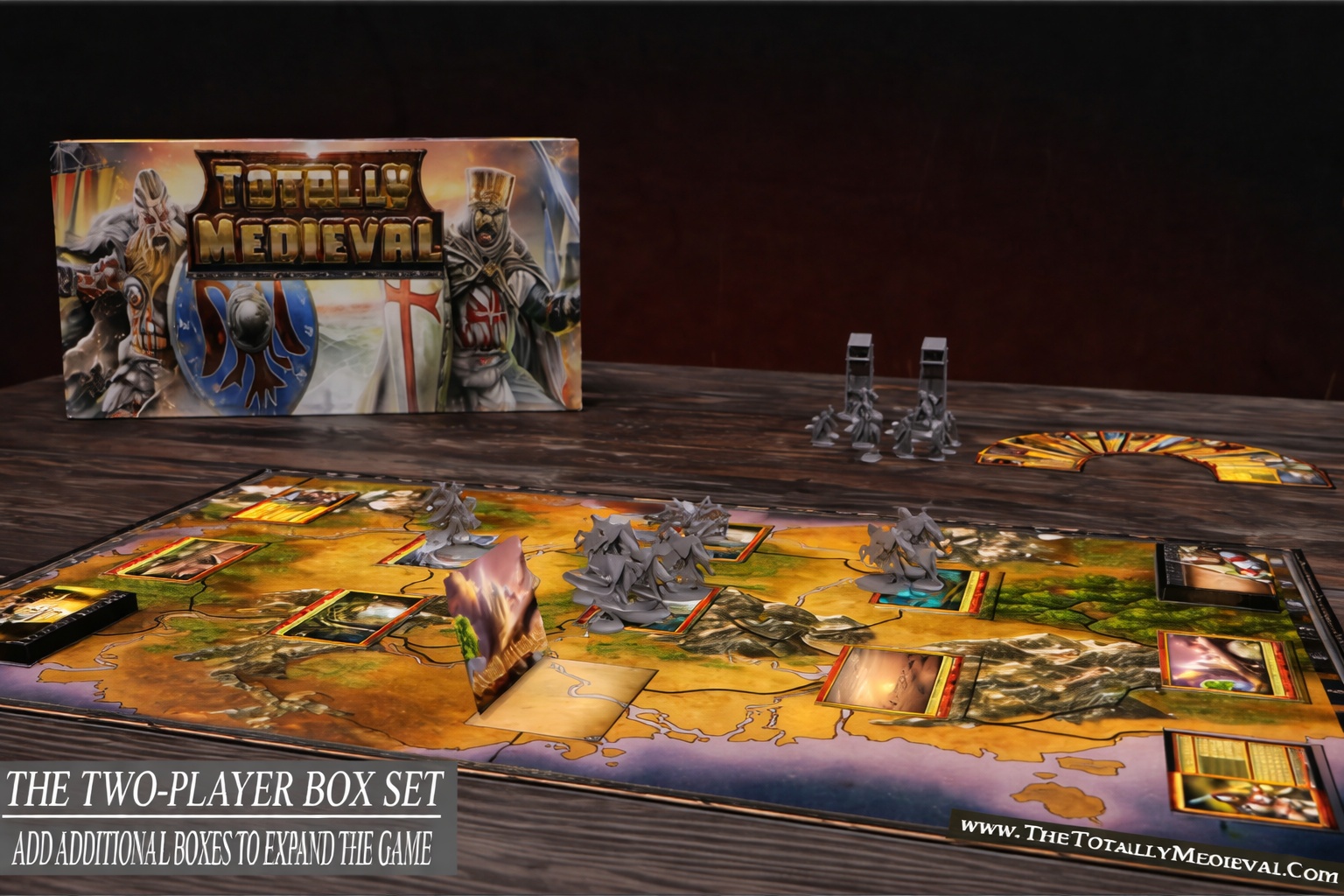
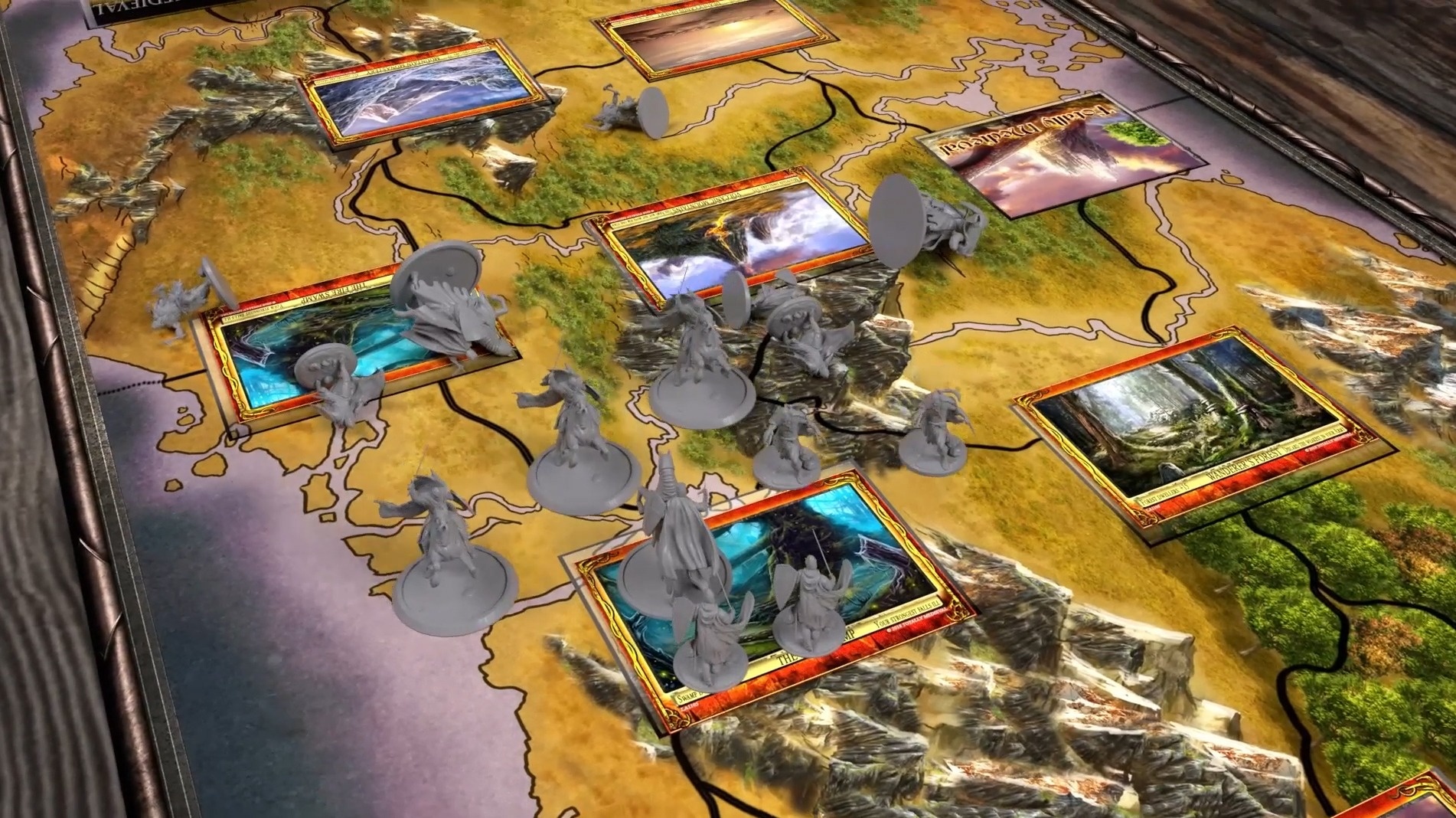
Totally Medieval was created with this philosophy in mind. Rather than separating learning from play, it brings them together through exciting adventures that encourage students to think, calculate, plan, and solve problems every turn. The game's almost chess-like strategic gameplay rewards careful thinking while naturally reinforcing essential mathematical skills. Players are constantly making decisions, evaluating options, and applying what they know in meaningful ways.
Our Totally Medieval Math Dice take this idea even further by allowing families and teachers to transform nearly any board game into a math-learning experience. Simply replace ordinary dice with Math Dice, and students begin practicing important math facts every time they take a turn. Whether at home, in classrooms, homeschool groups, after-school programs, or family game nights, students receive repeated opportunities to strengthen their skills without feeling like they are completing another worksheet.
When children enjoy learning, they willingly practice more often. When they practice more often, they build stronger memories. And when mathematical thinking becomes part of exciting adventures instead of routine drills, students develop confidence and skills that can remain with them for a lifetime.