Why Learning History Through Physical Activities and Games Is Essential for Many Students
By Historical Conquest LLC · April 27, 2026
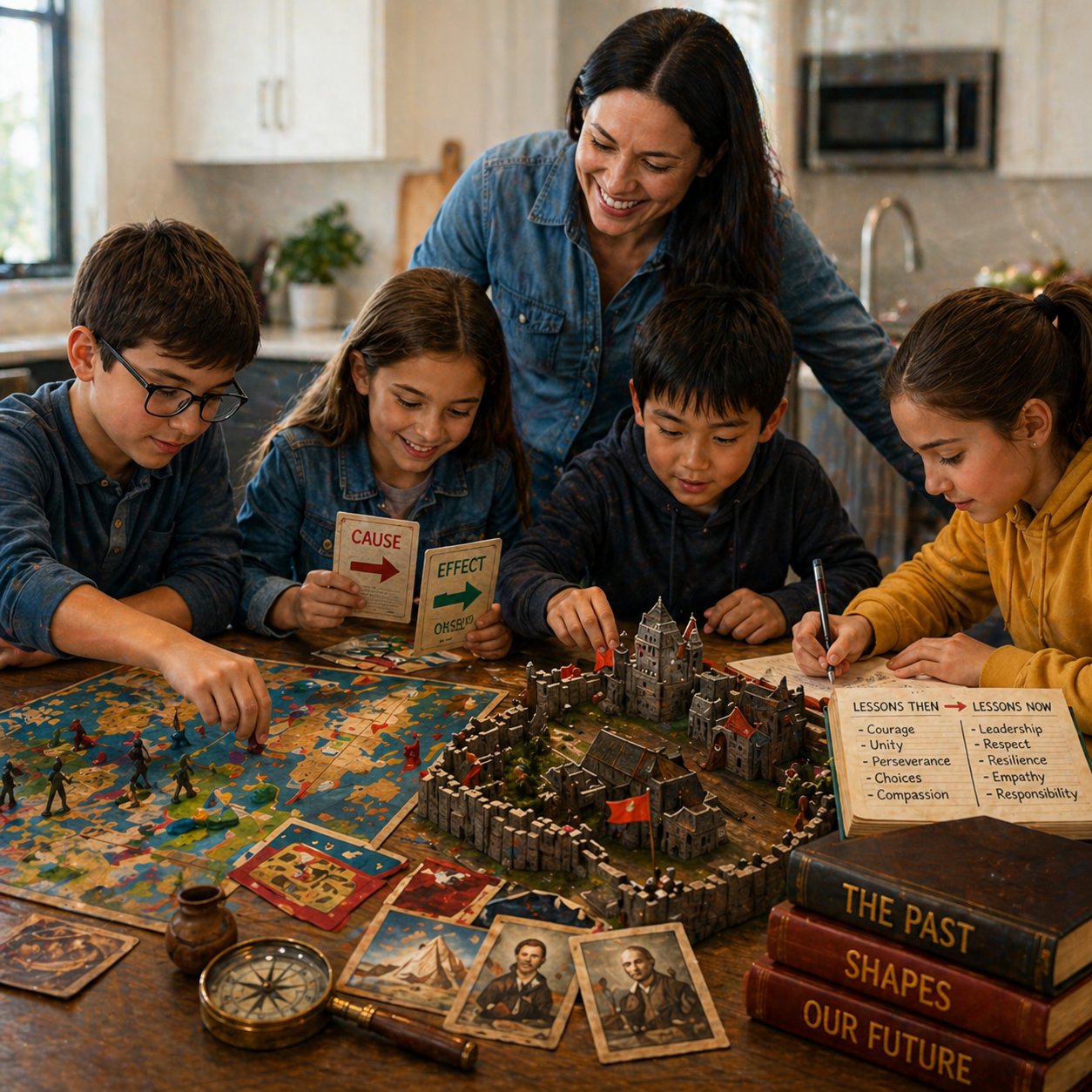
History is not meant to be memorized—it is meant to be experienced, understood, and applied. Yet for decades, history education has leaned heavily on passive learning: reading textbooks, listening to lectures, and recalling facts on tests. While this approach works for some students, research clearly shows that a significant portion of learners are left behind without active, hands-on experiences.
For these students, history does not “stick”—not because they lack ability, but because they are not being taught in a way that aligns with how their brains learn best.
The Science Behind Kinesthetic and Active Learning
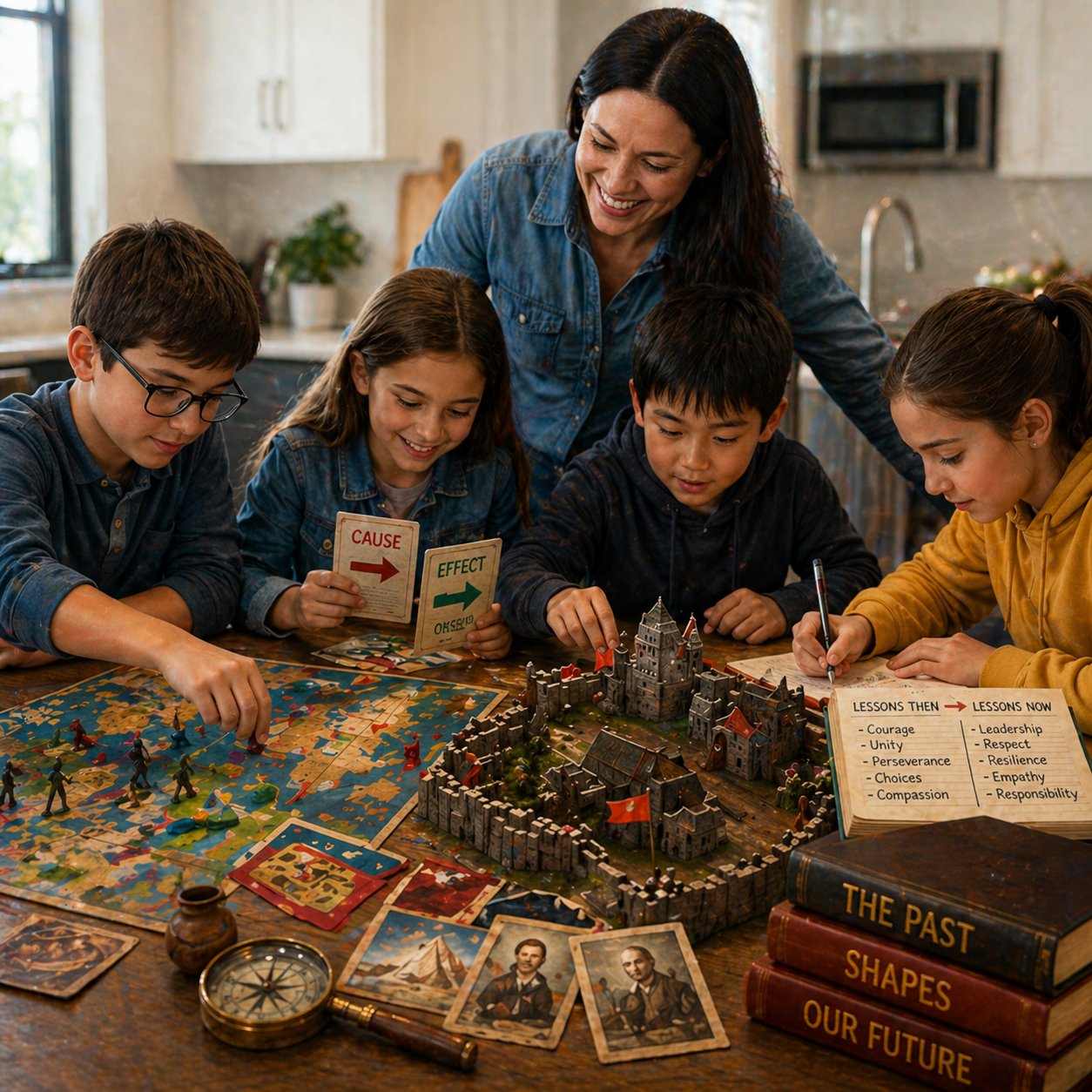
Modern research consistently shows that students are not all wired the same way. In fact, many are naturally inclined toward movement, interaction, and hands-on engagement.
- Studies show that up to 85% of students exhibit strong kinesthetic tendencies, meaning they learn best through movement and physical engagement
- Research on learning styles finds that kinesthetic is one of the most common preferences, often appearing in multimodal learners
- Approximately 15–20% of learners strongly identify as kinesthetic, requiring hands-on interaction to truly grasp concepts
This means a large portion of students are not just helped by active learning—they depend on it.
When these students are placed in passive environments, they may:
- Struggle to retain information
- Lose focus quickly
- Become disengaged or frustrated
- Develop anxiety toward academic subjects
But when movement and interaction are introduced, something powerful happens.
Why Movement and Physical Engagement Improve Learning
Physical activity is not a distraction from learning—it is a driver of learning.
Research shows that:
- Movement improves concentration, reduces stress, and increases retention
- Hands-on learning makes abstract concepts more tangible and memorable
- Active learning environments can lead to dramatic improvements in performance and confidence
In fact, in studies of active and kinesthetic environments:
- Students demonstrated higher engagement and motivation (up to 70% increases)
- Knowledge retention rose significantly, with up to 75% retention vs. 50% in traditional settings
- Students showed improved practical understanding, not just memorization
This is the key difference:
Traditional learning builds memory.
Active learning builds understanding.
Why History Specifically Requires Active Learning
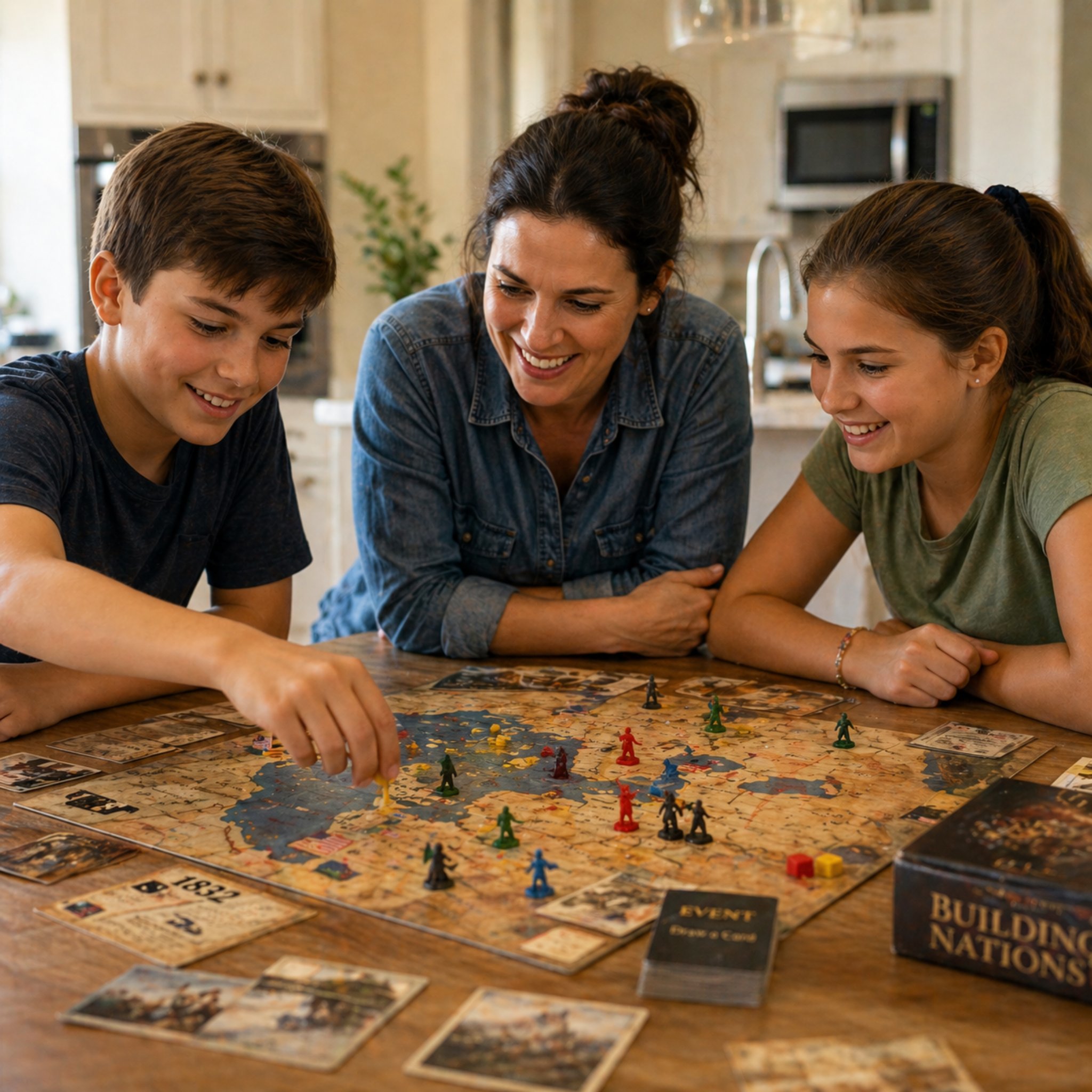
History is not just a collection of dates—it is a story of people, decisions, consequences, and lessons.
To truly understand history, students must:
- Feel the tension of decision-making
- Experience cause and effect
- Engage emotionally with real human struggles
- Revisit and reinforce ideas over time
Kinesthetic and game-based learning naturally supports all of these.
1. Emotional Attachment Drives Memory
Students remember what they feel. When they participate in simulations, role-playing, or games:
- Events become personal
- Decisions carry weight
- Outcomes create emotional impact
This emotional connection dramatically improves recall and comprehension.
2. Repetition Through Action Strengthens Retention
Repetition is critical for learning—but passive repetition is often ineffective.
Active repetition (through games and activities):
- Reinforces concepts in varied ways
- Builds neural pathways through action
- Keeps students engaged instead of bored
3. Tactile Learning Makes Abstract Ideas Real
Concepts like trade, war strategy, alliances, or economic systems can feel abstract.
But when students:
- Handle physical materials
- Move pieces
- Simulate events
These ideas become concrete and understandable.
Actionable Ways to Teach History Through Physical Activities and Games
Here are practical strategies parents and educators can implement immediately:
🔹 Movement-Based Learning Activities
- Have students walk timelines across a room or yard
- Use body positioning to represent alliances, conflicts, or social hierarchies
- Create “living maps” where students physically move across geography
🔹 Game-Based Learning
- Use strategy games that simulate:
- Trade systems
- Military decisions
- Political alliances
- Introduce card-based or board-based historical simulations
- Create competition-based review games to reinforce knowledge
🔹 Role-Playing and Simulation
- Assign students historical roles and have them:
- Debate decisions
- Negotiate treaties
- Respond to crises
- Recreate key events where students must make real-time choices
🔹 Hands-On Projects
- Build models (cities, battlefields, inventions)
- Create physical artifacts (maps, tools, documents)
- Design interactive displays or presentations
🔹 Repetition Through Engagement
- Use daily quick-play games to review past material
- Rotate activities to revisit the same concept in new ways
- Incorporate storytelling with physical reenactment
🔹 Emotional Connection Strategies
- Ask “What would you do?” in real scenarios
- Let students experience consequences of decisions in simulations
- Connect historical events to modern parallels
The Real Goal: Understanding Over Memorization
When students learn history through movement, games, and hands-on interaction, something deeper happens:
They stop asking:
“What do I need to remember for the test?”
And start asking:
“Why did this happen—and what can we learn from it?”
This shift is everything.
Because history is not just about the past—it is about:
- Decision-making
- Leadership
- Consequences
- Human behavior
These are life skills, not just academic content.
Conclusion: It’s Time to Change How We Teach History
The research is clear. The outcomes are proven.
A large percentage of students:
- Need movement
- Need interaction
- Need emotional engagement
- Need repetition through action
Without it, they may never fully grasp the lessons history has to offer.
Now the question is:
Will we continue teaching history in a way that only works for some students…
or will we build learning experiences that work for all of them?
Take Action Today
If you want your students to truly understand history—not just memorize it—start here:
- Replace one passive lesson each week with an active one
- Introduce one game or simulation into your curriculum
- Encourage movement, discussion, and decision-making
- Focus on experiences, not just information
Because when students live history, they don’t forget it.
And more importantly—they learn how to apply it.